Complete Solar Systems and Installations. Solar Maintenance, Upgrades and Repairs.
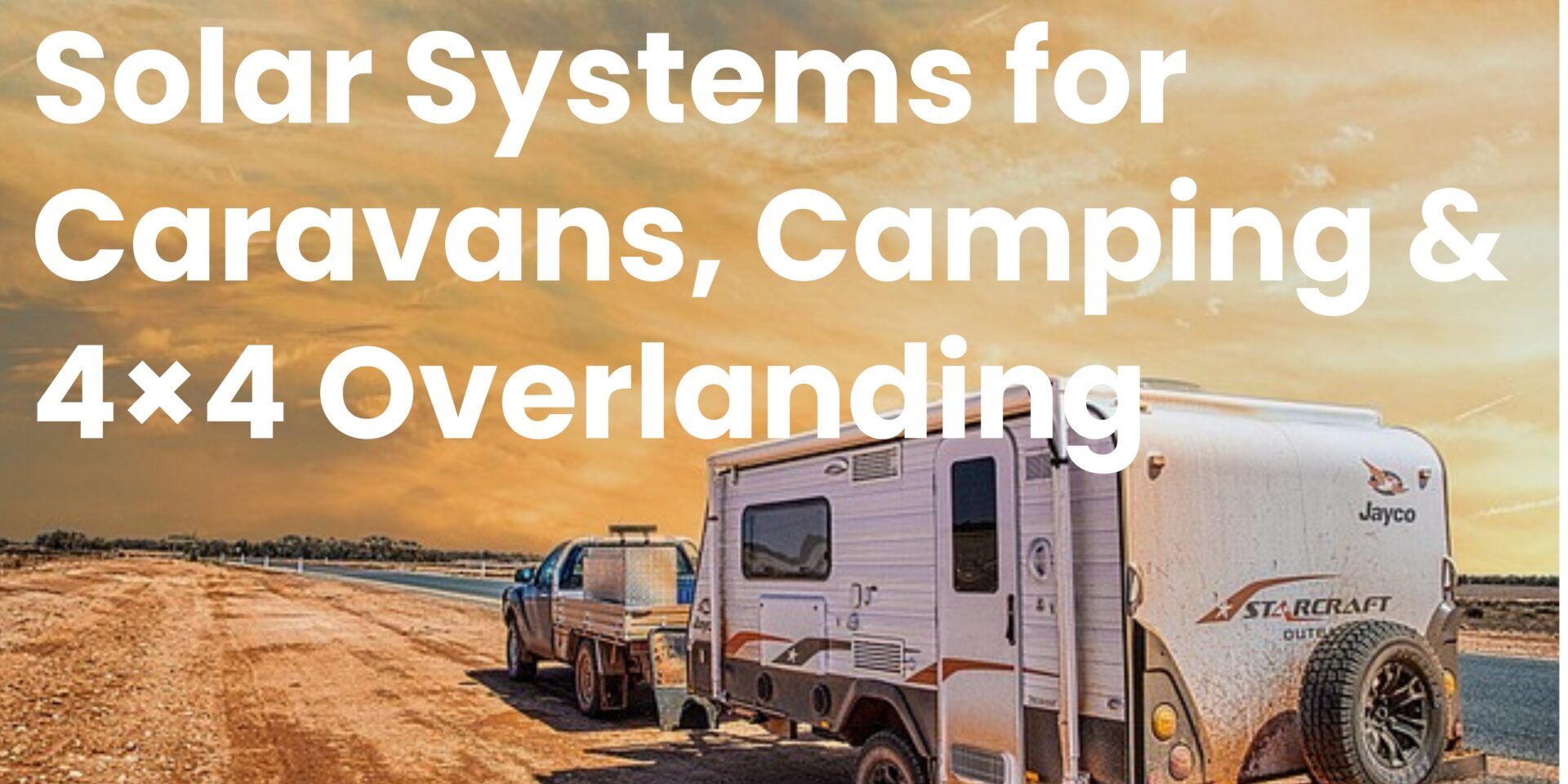
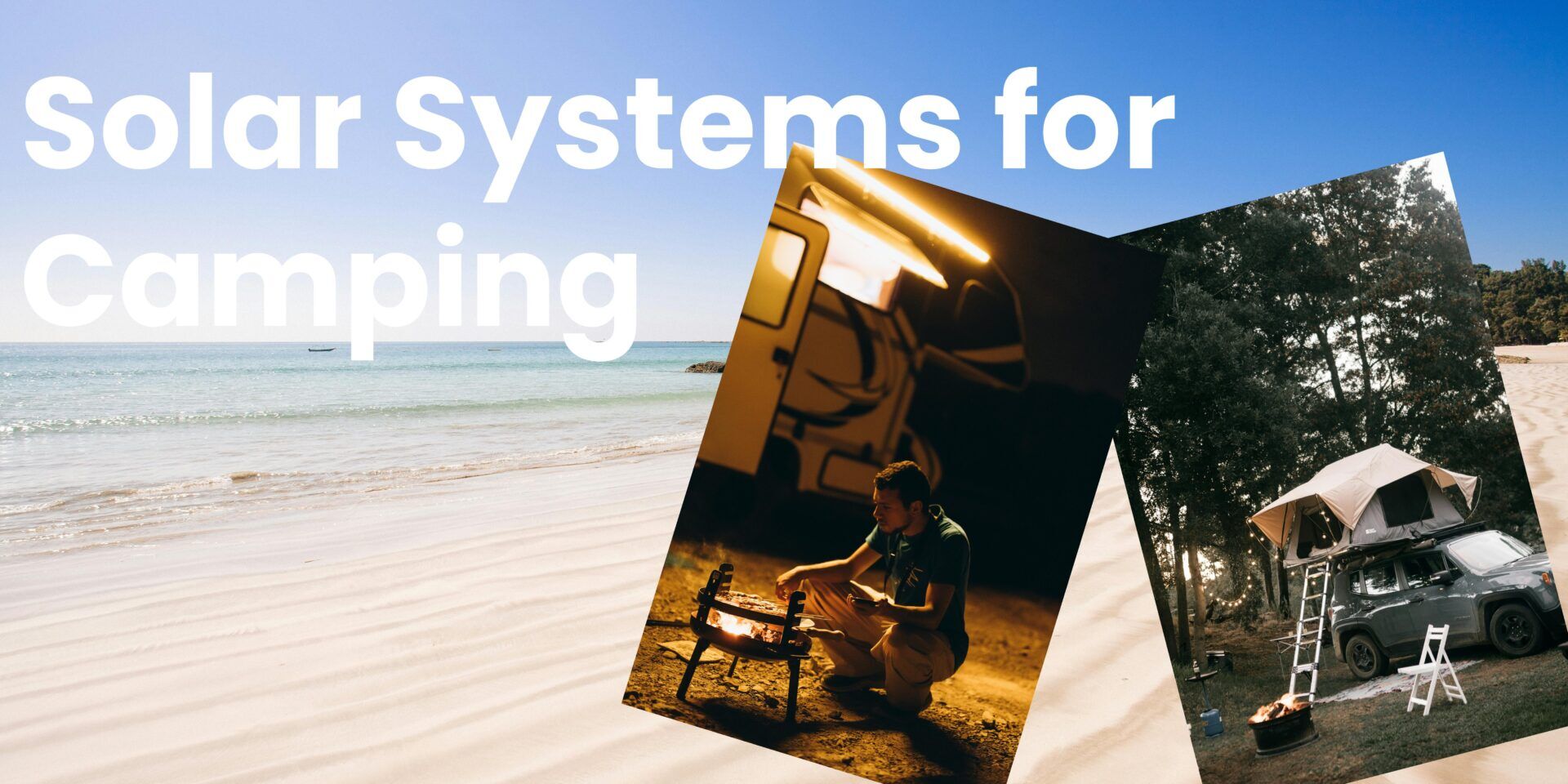
Solar Systems for Camping, Caravans & 4×4 Overlanding
Getting away from the grid doesn’t mean sacrificing comfort. Whether you’re towing a caravan, heading off in a 4×4, or setting up at a remote campsite, the right solar system can let you run lights, fridges, gadgets — and still feel completely free. This guide covers three tiers of system: smaller off-grid kits, medium custom-built kits, and larger in-built caravan/trailer systems. Pick the one that fits your lifestyle — and power your next outing with confidence.
Solar systems for camping: Smaller Off-Grid Kits
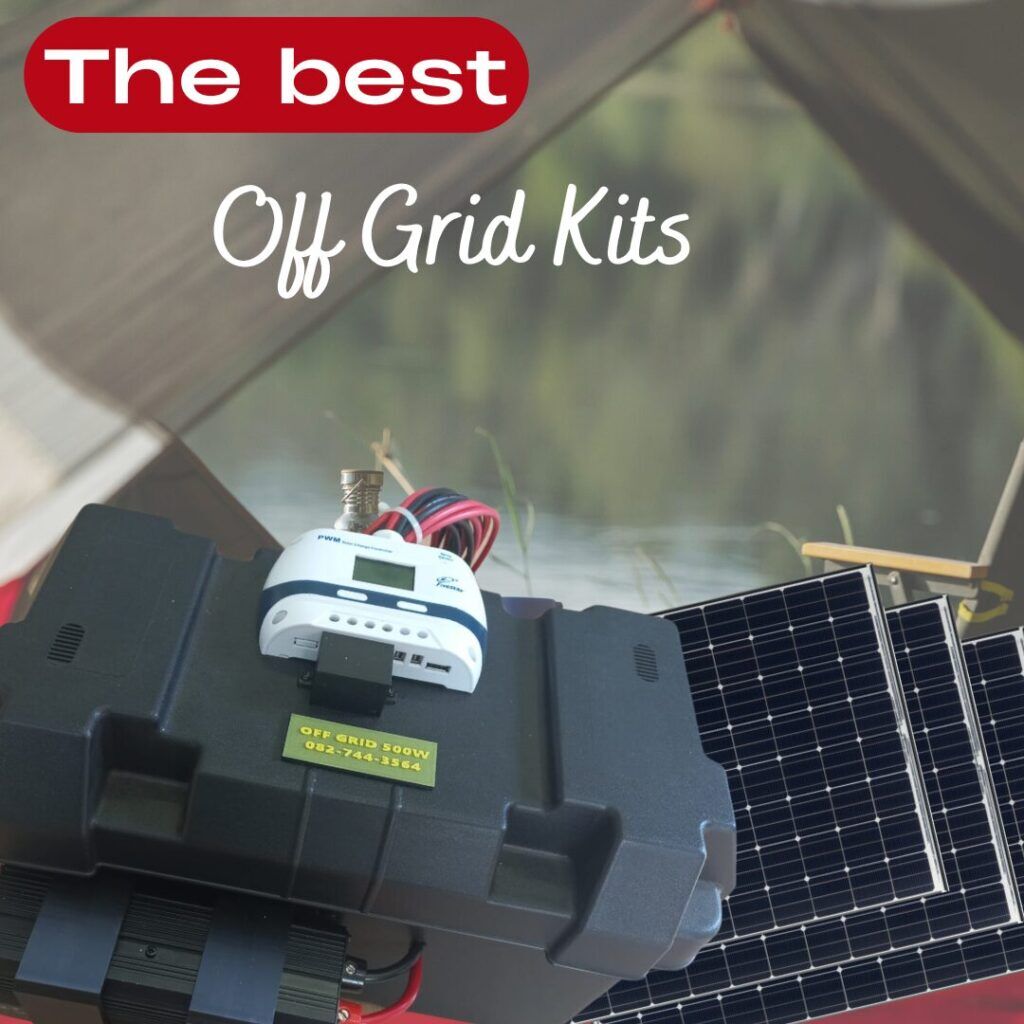
Grab and Go Freedom. Imagine you’re heading out for a weekend retreat in nature. You want minimal set-up, maximum flexibility, and no hassle. That’s where the portable battery box + optional panel kit comes in.
These systems typically consist of a lithium battery pack (or sometimes deep-cycle AGM) housed in a “box” format, with modular solar panels you can deploy if you choose. They’re lightweight, plug-and-play friendly, and perfect for:
- Running 12 V lights, phone/laptop charging, a small fridge or cooler.
- Powering audio/entertainment gear at the campsite.
- Camping off-grid for short periods.
- Giving you backup power for your 4×4 adventures.
Why this is a smart move:
- Low cost entry into solar for outdoor use.
- Minimal installation or structural modification required — you can literally pick it up, plug in and go.
- Gives you immediate independence from mains power or noisy generators.
- Ideal for frequent campers, weekend warriors, or those still deciding how far off-grid to go.
Things to check:
Battery capacity (Ah or Wh) and output (12 V, 24 V, AC outlets) — will it power what you need?
If included, solar panel wattage and portability (folding panels vs rigid mounted).
Charge controller type (MPPT vs PWM) — influences efficiency especially in variable sunlight.
Weight and size — you’re carrying it into the bush, so portability matters.
Expandability — if later you decide you want more power or more panels, can you grow the system?
Medium Kits – Custom-Built to Match Your Needs
When you’ve got a bit more ambition — maybe regular overlanding, longer stays off grid, or you want to run more than just lights and a fridge — medium custom solar kits become the sweet spot.
These setups are built around your specifications: battery size, solar array size, 12 V/24 V/AC output, inverter size, and installation method. They might be mounted to your 4×4 roof or built into your van/trailer, or they may still remain portable but larger than the weekend-kit.
What you get:
A more substantial battery bank (often lithium) capable of powering high-draw appliances (e.g., microwave, 220-240 V outlets, air-pump, multiple lights).
Larger solar panels, sometimes fix-mounted on your vehicle roof or trailer roof, or fold-out arrays for remote camps.
An inverter/charger system so you can run AC appliances and charge while driving or from alternate sources.
Custom wiring, monitoring systems (battery monitoring, solar input meters), and professional installation if required.
Why upgrade to this:
More flexibility: longer off-grid stays, more appliances, more comfort.
Still mobile: you’re not tied to a fixed house-solar installation; you’re still on the move.
Better value: you choose exactly what you need rather than over-paying for turnkey ultra-large setups.
What to plan for:
Define what you’ll be powering: fridge, laptop, lighting, AC, water pump — tally up Watt-hours daily.
Understand your solar input: roof area, panel orientation, shading issues while parked.
Consider how you’ll charge the battery while driving (via vehicle alternator or DC-DC charger) or via solar.
Safety & installation: good cable sizing, proper fuse/breaker protection, ventilation for heat.
Monitoring & user interface: being able to see battery state-of-charge, panel output, inverter load.
Larger Caravan/Trailer Systems – Integration & High Performance
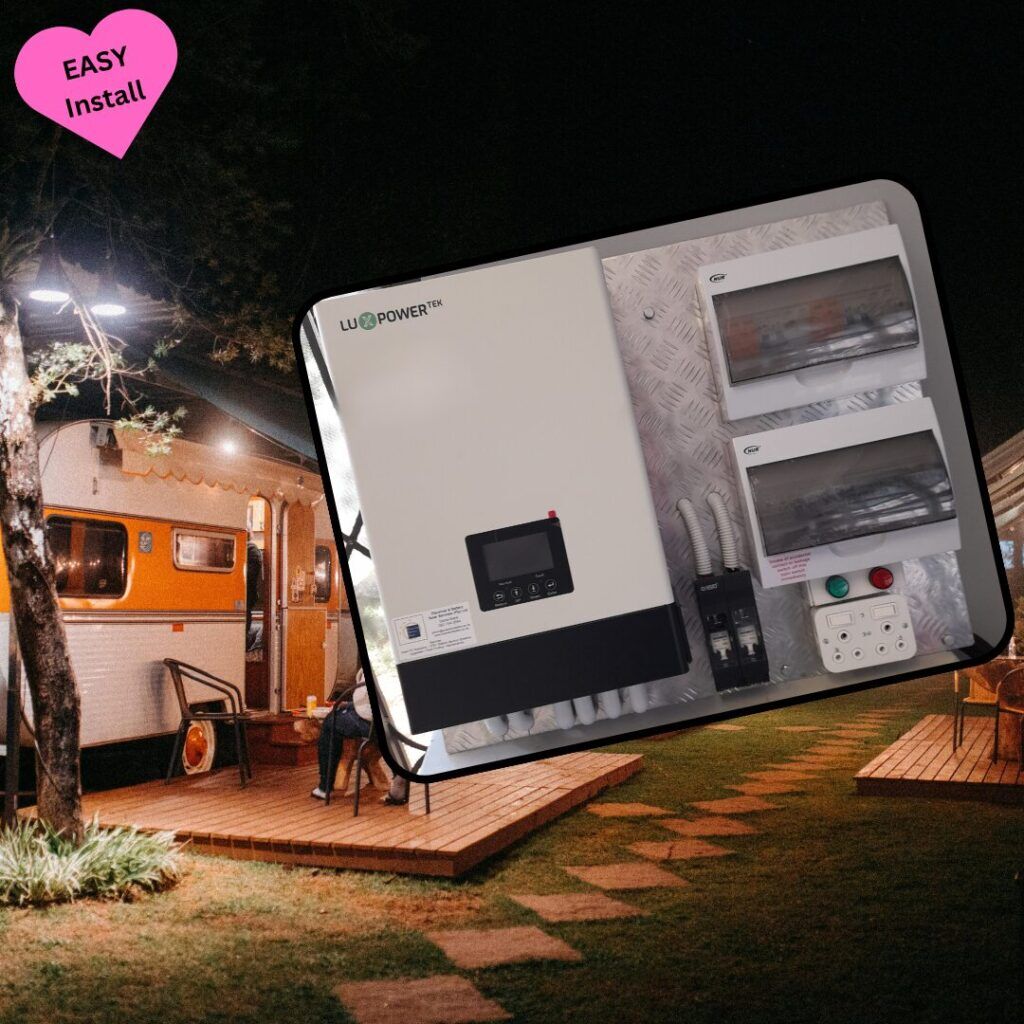
For the overland pro, the serious traveller, or those who equip their caravan/trailer as a full “home-away-from-home,” the full integrated solar system is the way to go. These systems are fit-inside or on the roof of the caravan/trailer, wired hidden-away, set-and-forget ready.
Key features:
- Large battery banks (many kWh) — think overnight stays, fridge/freezer, full lighting, possibly air-conditioning or heating, and power tools.
- Roof-mounted solar arrays, possibly multiple panels linked, maybe even flexible panels on trailer roof or side.
- AC and DC circuits built in: 220-240 V outlets inside caravan, USB and 12 V outlets, lighting circuits, possibly built-in WiFi/monitoring.
- Engineered system architecture: inverter-charger, MPPT charge controllers, bus bars/distribution board, monitoring display, isolation switch for driving.
- Professional installation and integration such that the trailer just works when you arrive; minimal setup on-site.
Why this level matters:
You’re genuinely off-grid for days if required. No reliance on campsite mains connectors.
A high‐end experience: you bring the comforts of home but you’re out in nature.
For those who invest in frequent extended trips, the system frees you to go further, stay longer, and enjoy without logistical headache.
Considerations:
- Budget: larger systems cost significantly more (bigger batteries, more panels, labour).
- Weight & space: battery banks and panels add weight/height; must factor into towing spec, suspension, stability.
- Maintenance: although well built, you’ll want occasional checks on panel integrity, wiring, battery state.
- Future-proofing: can you expand later? Can you link alternator charge? Is monitoring up to date?
Installation must be done right to avoid safety issues (battery ventilation, proper mounting, wiring inline with automotive/trailer standards).
Choosing the Right System for You
How many nights off-grid before you need mains support?
- Short (1-2 nights) → Smaller kit.
- Several nights/regular → Medium kit.
- Many nights or remote base camp → Larger integrated system.
What appliances/devices will you need?
- Phone/laptop/fridge only → Smaller.
- Fridge + lighting + AC or heavy draw → Medium.
- Multiple appliances, air-conditioning/heating, motors/pumps → Larger.
How often will you relocate vs park for days?
- Relocate often → portability important → Smaller or Medium.
- Parked for days at a time → Larger system makes sense.
What’s your budget & tolerance for installation?
- Low budget/minimal installation → Smaller.
- Moderate budget/custom install → Medium.
- High budget/professional install → Larger.
How important is flexibility vs permanence?
- Flexibility (plug-&-go) → Smaller.
- Custom but still mobile → Medium.
- Integrated, built-in trailer system → Larger.
Why Solar Power Changes the Game for Caravans/4×4/Camping
Freedom from the grid: No need to plug into mains, pay for campsite power, or worry about load-shedding.
Quiet & clean: Unlike petrol/diesel generators, solar + battery systems run silently, produce no fumes — ideal for natural settings.
Cost effective over time: After the upfront investment, your “fuel” is sunlight — and minimal maintenance.
Increased comfort and capability: Keep your fridge chilled, devices charged, lights on, music playing — even off-grid.
Flexibility to go further: With the confidence of reliable power, you can explore remote areas, stay longer, and truly avoid the crowds.
Tips for Maximising Your System’s Performance
- Place your solar panels for optimal sunlight: roof-mounted is best, but if you must unfold/tilt panels, angle them toward the sun and avoid shading (trees, awnings, other equipment).
- Monitor and mind your battery’s state of charge — lithium batteries are great, but leaving them flat or overcharging reduces life.
- Use energy-efficient appliances: LED lighting, energy-efficient fridge, low-draw devices help your battery last longer.
- Plan your load + solar input: Know how many watt-hours you’ll consume each day and ensure your solar + battery covers it.
- Consider charging while driving (for 4×4 or towing vehicles) to top up your battery bank before you stop.
- Check wiring, protection (fuses, breakers), and ventilation for battery spaces — especially in a caravan/trailer build.
- Think ahead: Is your system expandable? Will you add more panels, bigger battery, inverter later as your needs grow?
Final Word
Whether you’re just testing the waters with a portable battery box + optional panels, stepping up to a custom medium kit, or going all in with a full caravan/trailer integrated solar system, choosing the right kit opens up a whole new dimension of freedom. You’re no longer tied to the mains or generator — you’re free to explore, stay longer, enjoy nature, all while comfortably powered.
So plug in (quietly), hang your hat, fire up the fridge, and hit that sunset with confidence. Your next adventure just got powered.
